A visual research project · 2026
Itinerariesand Gates.
Stories and symbols of the traditional gates of Gorj, in dialogue with the Gate of the Kiss
35 gates · 20 localities · Gorj — Maramureș
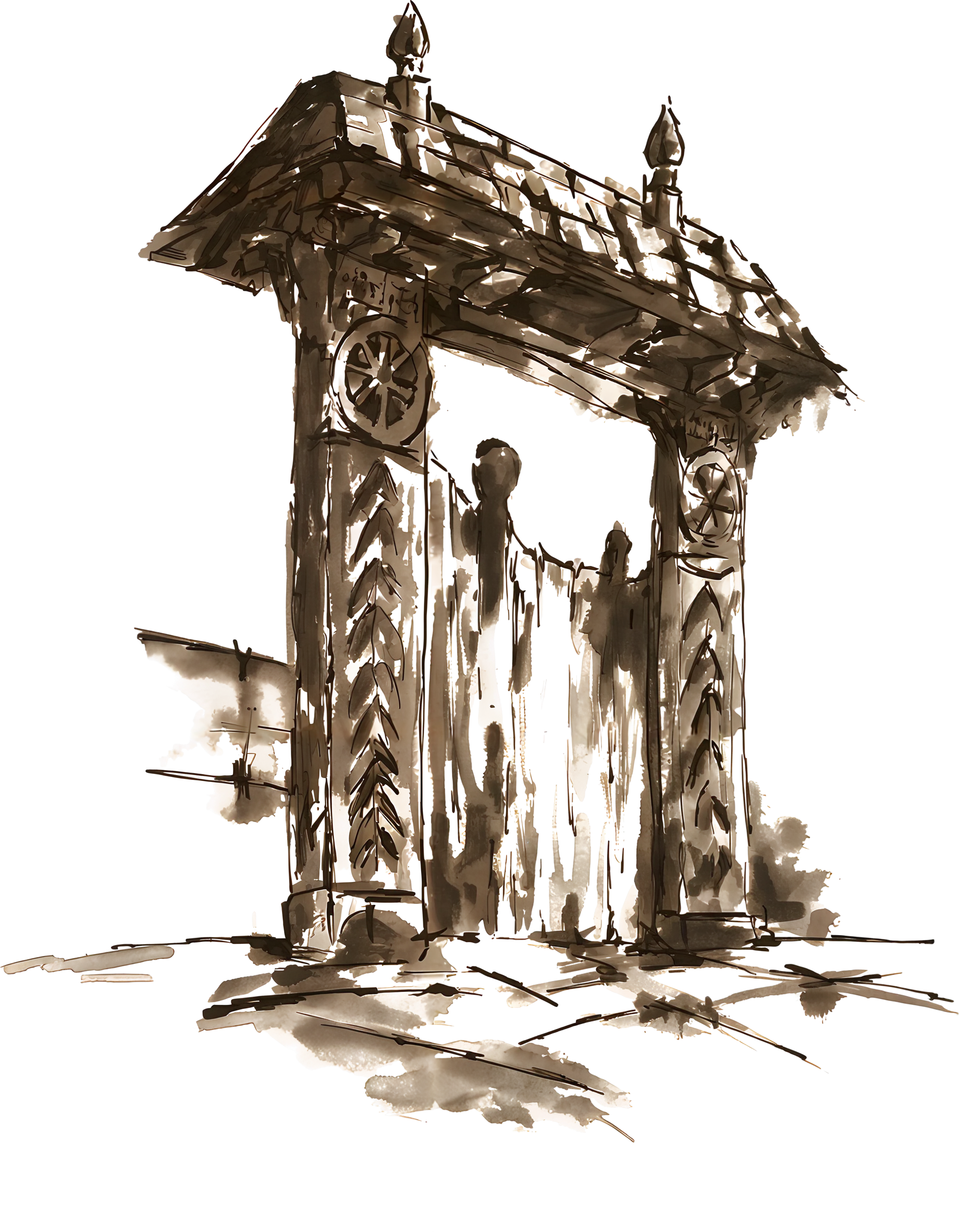
About the project
Stories and symbols of the traditional gates of Gorj, in dialogue with the Gate of the Kiss.
The project follows the gates in the places where they were raised and in the stories of those who knew them. To understand their symbols and purposes, the research sets fieldwork and the testimony of the communities in dialogue with studies of symbol, ritual and traditional culture. Its references include the work of Mircea Eliade, Gilbert Durand, Aurelia Diaconescu, Romulus Vulcănescu, Paul H. Stahl, Sorana Georgescu-Gorjan and Ernest Bernea, alongside other specialist sources.
From the signs and forms of the gates, a route towards Brâncuși also takes shape: he turned sources of folk art into forms of universal value. The Atlas of Gates gathers this research into a visual archive of short films, photographs, maps, interviews and texts.
About- Gate carvers
- Ioan Muntean · Maramureș
Ștefan Strâmtu · Gorj - Curator
- Andrei Fășie
- Illustration
- Eugen Șerbănescu
I · Gates
Map of the field research
The route of the field research across Gorj county.
The dotted line joins the localities in route order; it is not a road.
II · Residencies
The two new gates
In the artist residencies at Curtișoara and Vadul Izei, the craftsmen-sculptors Ștefan Strâmtu and Ioan Muntean carved two new gates together. Each starts from the character of one tradition and bears the traces of the meeting with the other. Their dialogue points to the Gate of the Kiss: from the threshold of the household to Brâncuși’s monumental portal, the gate becomes a form of passage and of (re)encounter.
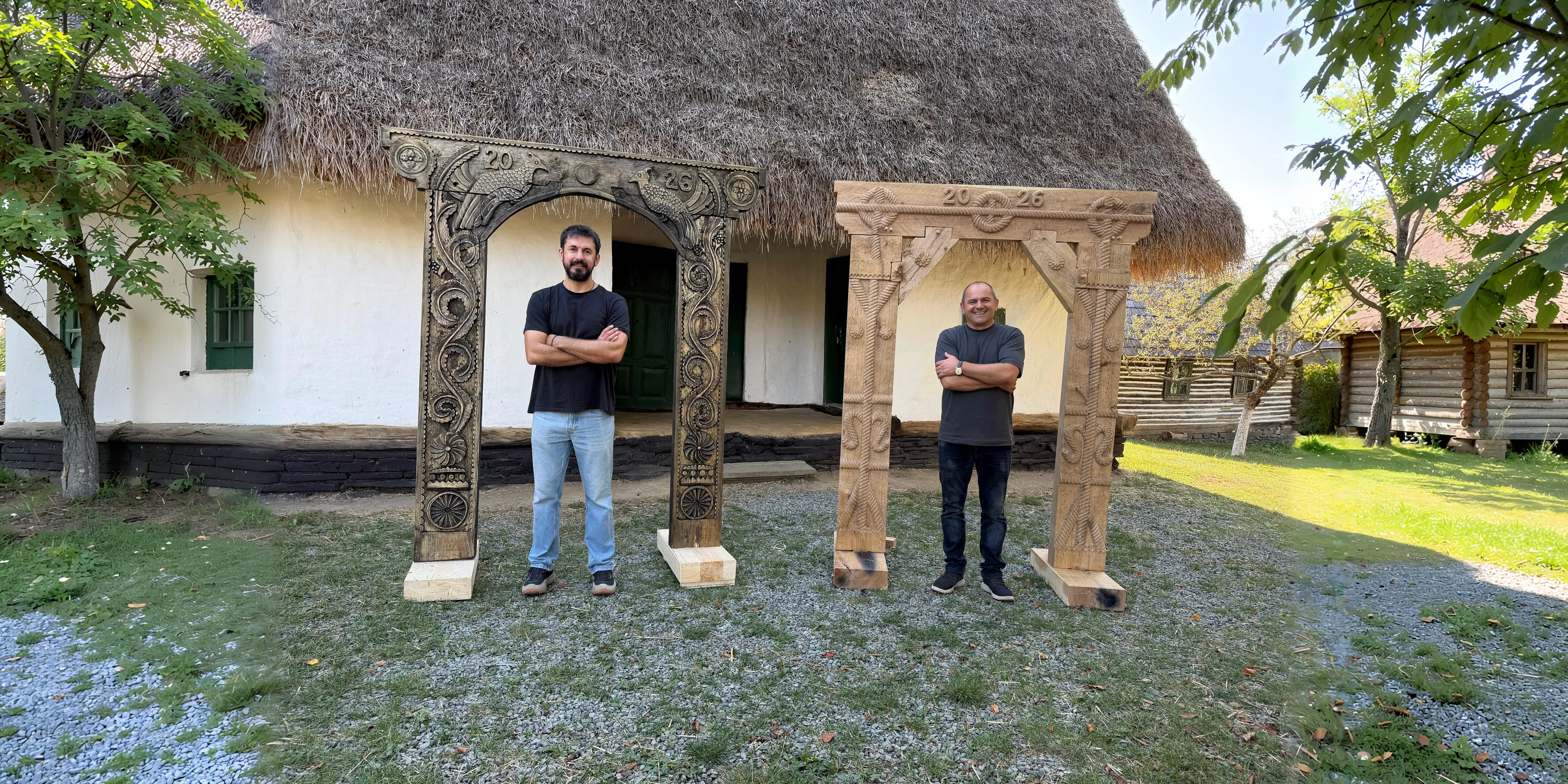 Cross-flowerCross-flowerIn the medallions at the lintel cornersCuratorial reading Solar rosetteSolar rosetteAt the foot of the postsCuratorial reading Whirl rosetteWhirl rosetteOn the lower register of the postsCuratorial reading SpiralSpiralThe vine climbing the postsCuratorial reading Grape clusterGrape clusterClusters near the top of the postsCuratorial reading BirdBirdTwo facing birds on the lintelCuratorial reading Star in a circleStar in a circleOn the braces and in the crown of the postsCuratorial reading Knot of the yearKnot of the yearTies “20” to “26” at the centre of the lintelCuratorial reading Binding knotBinding knotBinds each post to the lintelCuratorial reading Tree in ropeTree in ropeThe post’s rope: roots, crosses, crownCuratorial reading Twisted ropeTwisted ropeAlong the whole lintelCuratorial reading SnakeSnakeTwo facing snakes, mid-postCuratorial reading Wolf's teethWolf's teethAt the foot and the head of the postsCuratorial reading
Motifs carved on the two gates
Gorj · Ștefan Strâmtu
Maramureș · Ioan Muntean
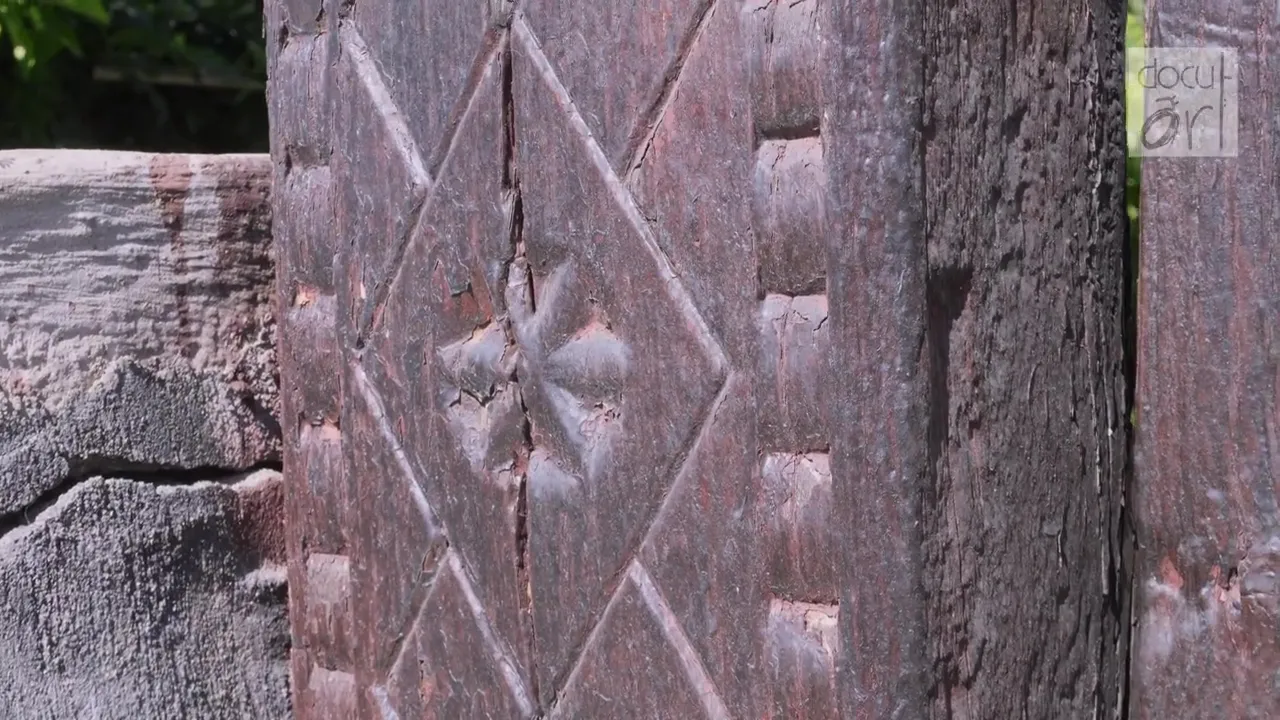
Visual research brings together the field documentation and the interpretation of the gates in different formats. The 35 films follow the gates documented in Gorj, while the filmed interviews, analyses and research articles deepen the reading of their symbolic vocabulary and of their ties to the world of the communities that made them. Together, these materials form an archive of images and interpretations in which wood becomes a bearer of memory and meaning.
Visual research